Towards paradise
How a family shapes the idea of a life well lived, and whether that measure can still change.
2026 14 images
14 images
Towards paradise
Towards paradise
2026
How a family shapes the idea of a life well lived, and whether that measure can still change.
A photographic enquiry into how a family shapes a vision of life, and whether that vision can change.
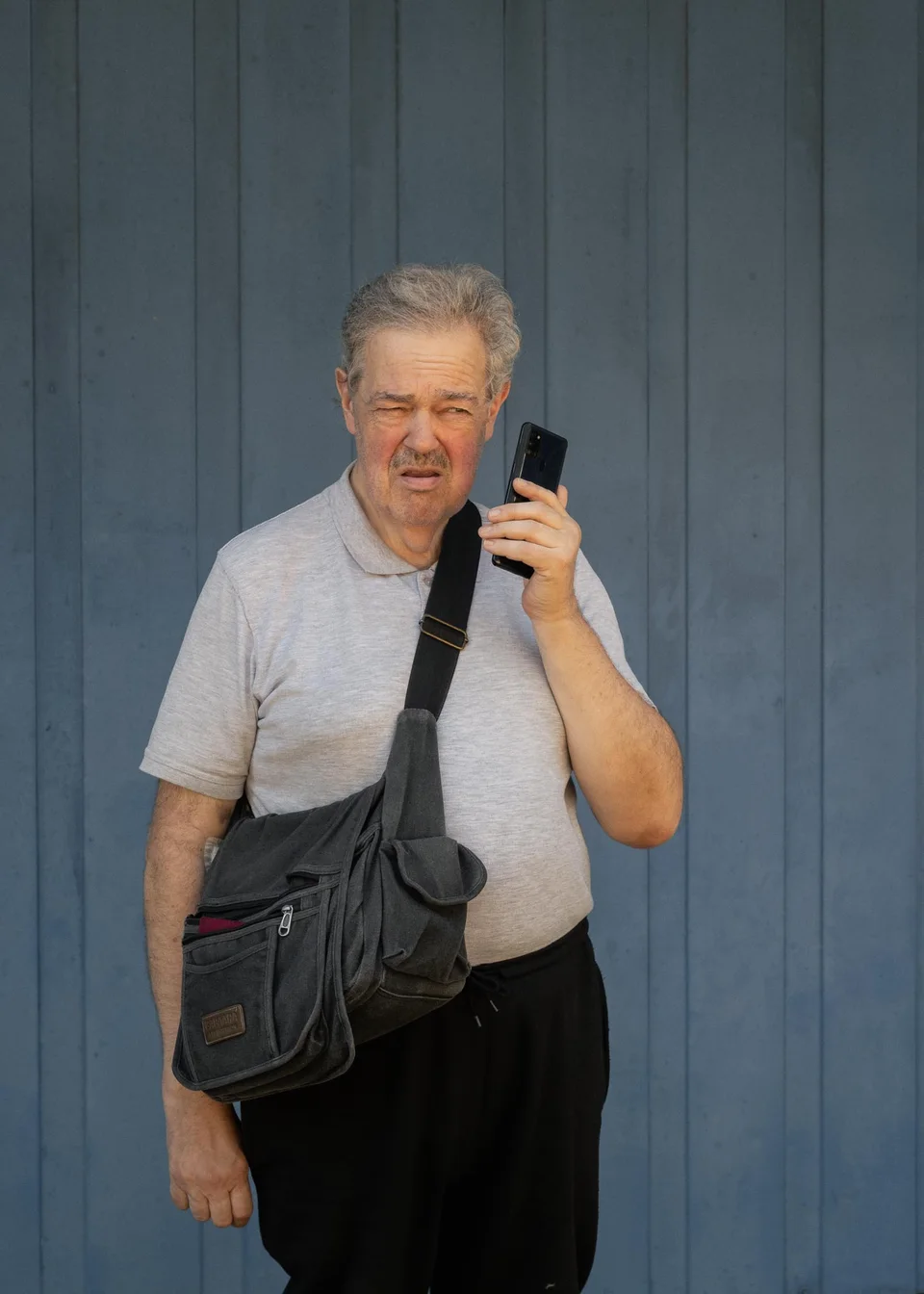
Towards Paradise follows Mr M. and examines how the idea of a successful life takes shape within a family. In the close bond with his parents, closeness and care merged with material security, social recognition and personal independence. His relationship with his mother in particular became the emotional centre of this way of life.
Today these deeply rooted standards meet fundamentally changed circumstances. In memories, religious rituals, biographical places and everyday encounters, the photographic work looks for traces of this imprint. It does not ask whether Mr M. is happy today, but by what he measures a successful life and what he is able to recognise as happiness at all.
Towards Paradise asks: can a deeply rooted idea of how one’s life ought to be change, or does it live on even when reality has long ceased to match it?
In detail
Our idea of a successful life does not arise independently. It is formed within family relationships, social expectations and inherited values, often long before we recognise it as our own. Towards Paradise examines how such a vision of life takes root in a person and whether it can be redefined under changed conditions.
The starting point is the biography of Mr M. At the heart of his background is an unusually close family. Together with his parents he formed an almost closed alliance of three that others called “the three musketeers”. This family was at once lived belonging and the place where his idea of a good life took shape. Closeness, care, material security, social recognition and personal independence were not separate within it but part of the same inner order.
Mr M.’s pursuit of economic success therefore cannot simply be read as a desire for wealth. Money promised independence, protection and the chance to preserve the familiar life. Herein lies a central tension of the project: between the family as the declared source of his happiness and the material conditions meant to secure it.
When his outer circumstances changed fundamentally and his mother later died, this inner vision did not disappear. Instead it now becomes apparent how lastingly it shapes his self-image, his memories and his perception of the present. What remains of an idea of a successful life when the conditions from which it arose no longer exist?
The photographic work moves between Mr M.’s present everyday life, biographical places, keepsakes, religious images and moments of encounter. It does not reconstruct a linear life story. Instead it looks for traces of an internalised model of life: in gestures and rooms, in rituals, stories and recurring images. Tensions arise between closeness and dependence, self-determination and care, material security and emotional belonging, memory and present experience.
The central question is not whether Mr M. is happy today. What matters is the standard by which he views his life and what he can recognise as happiness at all. Is happiness a present experience, or does it only become visible in retrospect? Can a person change their ideas, or do old values merely acquire a new language? And how much of what we take to be our personal desire was already laid down in us by where we come from?
Towards Paradise does not understand paradise as a concrete place or a state that can finally be reached. It stands for an inner idea of how life ought to be: an idea that gives orientation but can also narrow the view of other possibilities.
The project accompanies Mr M. with the open question of what remains of this idea, what changes, and whether a successful life can be imagined differently under new conditions.